House Race: Three Seats Decide Control as New Maps Reshape Battlegrounds
With a 218-214 split, Democrats need a net gain of three districts to take the House, a margin that hinges on 46 competitive races and seven new state maps.
By Joao Menon ·
The control of the U.S. House of Representatives is being decided by a margin so narrow that it fits on the back of a single envelope. All 435 seats are up for grabs on this Election Day, but the outcome of the chamber will likely be determined by just three districts. According to Ballotpedia, Republicans currently hold 218 seats, while Democrats hold 214, with one independent and vacancies remaining. This arithmetic means Democrats must win a net gain of three districts to secure a majority. Conversely, Republicans can afford to lose no more than two seats to keep their grip on the chamber. The Associated Press notes that one or two seats could tip either chamber, making the outcome of these specific contests the central drama of the midterms.
The battleground is not evenly distributed across the country. Ballotpedia identifies 46 districts as competitive, with 25 currently held by Democrats and 21 by Republicans. These races are where the voters are focusing their attention. The complexity of these districts is heightened by the fact that 21 of the Democratic-held seats voted for Donald Trump in 2024, while nine Republican-held seats voted for Kamala Harris. This overlap suggests that the new House majority will be composed of members who won in districts that lean toward the opposing president, creating a challenging landscape for party unity and legislative strategy.
A significant factor in this year’s House race is the redrawing of congressional maps in seven states. California, Florida, Missouri, North Carolina, Tennessee, Texas, and Ohio are all using new district boundaries for the first time. These maps were drawn in the mid-decade redistricting cycle and are now being tested by voters. The Associated Press reports that while Republicans hoped these new lines would help them beat the historical midterm pattern of losing seats, the new districts in places like Florida may not vote as originally projected. This uncertainty adds a layer of unpredictability to the 46 battleground races, as candidates must now appeal to electorates that look different from those of four years ago.
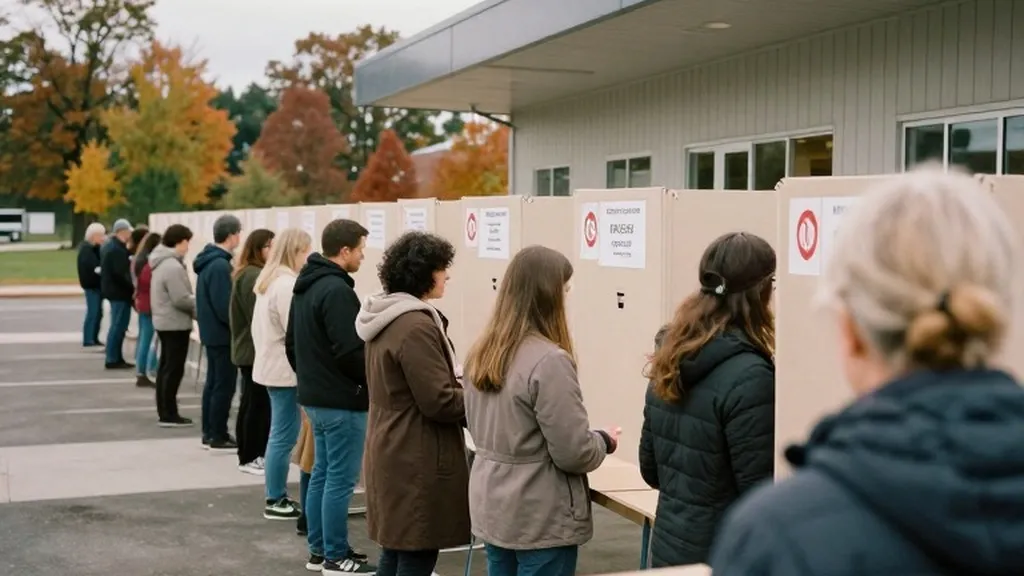
Turnout is the other critical variable in this equation. Republican National Committee Chairman Joe Gruters stated that everything depends on turnout, asserting that if they get their voters to the polls, they win. He emphasized that this has been the core of their planning strategy. On the other side of the aisle, House Democratic Leader Suzan DelBene described the American people as angry and wanting change. The Associated Press describes the election as a referendum on President Trump’s second term, with voters struggling with high prices and expressing anger over an unpopular war with Iran. These differing narratives are driving voter engagement in the tightest districts.
The financial resources behind these campaigns are also shaping the race. The 2026 elections are likely to be the most expensive in history, with Republican committees outspending their Democratic counterparts. This spending was driven by Trump-affiliated groups and support from Elon Musk. However, at the individual candidate level, Democrats outraised their opponents. An analysis of AdImpact data by the Associated Press found that 88.1% of Republican general election TV ad spending went to states and districts that Trump won in 2024. This included more than $850 million in districts where he won by 10 points or more, a strategy that contrasts with the focus on the 46 battleground districts identified by Ballotpedia.
Voters on the ground are expressing a mix of loyalty and frustration. Mark Barker, a voter in Palm Beach Gardens, Florida, said he has been following Trump the whole time and thinks he is doing an awesome job. In contrast, James Moore, a 57-year-old librarian in Raleigh, North Carolina, noted that he is paying more taxes, more for healthcare, and more for everything. These personal anecdotes reflect the broader polling data from AP-NORC, which shows that 35% of U.S. adults approve of Trump’s job performance, while about seven in 10 say the country is heading in the wrong direction. The House race is effectively a contest between these two viewpoints.
The stakes of controlling the House extend beyond simple legislation. If Democrats win the chamber, investigations and possible impeachment proceedings become likely. House Democratic Leader Hakeem Jeffries, who would become the first Black speaker if his party wins, has outlined a 100-day agenda focused on the cost of living and oversight. A strong Democratic showing would also boost potential 2028 candidates like Gavin Newsom, JB Pritzker, and Pete Buttigieg. For Republicans, holding the House is essential to defending the president’s agenda and maintaining the momentum of their party’s current leadership structure.
The administration’s actions have also played a role in the mood of the election. The Trump administration has continued to make claims about voting fraud, including allegations that noncitizens vote in large numbers. They have filed lawsuits in Alaska and California, and the Justice Department has threatened to prosecute local election officials. Critics argue these moves risk disenfranchising eligible voters, while supporters say they are necessary to ensure election integrity. These legal battles are unfolding as more than 57 million people have already cast their ballots, surpassing early vote totals from four years ago in many closely watched states.
The new maps in seven states are particularly scrutinized in Florida and North Carolina. In North Carolina, the race for the Senate includes former Governor Roy Cooper against Michael Whatley, with the district map changes affecting the dynamics of the state’s political landscape. In Florida, the new map is being tested in a state that voted for Trump by 13.1 points in 2024. The Associated Press notes that Republicans are bracing for the possibility of losing the House, while Democrats are cautiously optimistic. The outcome of these specific districts will determine whether the 218-214 split shifts by the three seats required for a change in control.