Trump's Heavy Hand: Rallies, Fraud Claims, and Candidate Tension
With polls open, the President's high-profile campaigning and legal actions create a complex backdrop for a midterm race where every seat is up for grabs.
By Joao Menon ·
President Donald Trump has cast himself as the central figure in this midterm election, a dynamic that has reshaped the campaign landscape for both parties. The Associated Press describes the vote as a referendum on his second term, noting that voters are struggling with high prices and are angry over an unpopular war with Iran. This context places the President's approval numbers under a microscope. According to AP-NORC polling, 35 percent of U.S. adults approve of his job performance, while only 25 percent approve of his handling of the economy. Approximately seven in ten adults say the country is heading in the wrong direction, with most blaming the President for rising costs.
Trump has been physically present at dozens of rallies, ending his recent schedule in Salina, Kansas, on Sunday. There, he urged supporters to "pretend I'm on the ballot." His itinerary included stops in Mississippi, South Carolina, and Texas, reinforcing his message that the election is effectively a judgment on his leadership. However, this intense involvement has not been universally embraced by his own party's candidates. The Associated Press reports that many Republican candidates have kept their distance from the President, likely seeking to balance their loyalty to him with the need to appeal to voters who may be wary of his polarizing presence.
The President's campaign has also been marked by persistent claims regarding voting integrity. Trump has continued to make false claims about voting fraud, including the assertion that noncitizens vote in large numbers. His administration has taken legal action in Alaska and California, with a federal judge temporarily barring a plan to prevent noncitizen voting and another judge ordering the administration to stop demanding that California officials segregate ballots cast by people on lists of suspected noncitizens. Democrats fear that these moves could lead to interference and intimidation, especially as the Justice Department threatens to prosecute local election officials.
Despite the President's active role, the stakes for Congress remain high and specific. All 435 seats in the U.S. House are up for election, with Republicans currently holding 218 seats and Democrats 214. Democrats need a net gain of three districts to secure a majority, while Republicans can afford to lose no more than two. In the Senate, 35 seats are on the ballot, with Republicans holding 53 seats and Democrats 45, plus two independents who caucus with Democrats. Democrats require a net gain of four Senate seats to take control, a threshold that makes the race particularly tight. Governors in 36 states are also up for election, with Democrats aiming to hold a majority of governorships for the first time in two decades.
The financial resources behind the campaigns reflect the high stakes and the President's influence. The 2026 elections are likely to be the most expensive in history. Republican committees have outraised and outspent their Democratic counterparts, aided by Trump-affiliated groups and significant contributions from Elon Musk. However, at the individual candidate level, Democrats have managed to outraise their opponents. An analysis by the Associated Press of AdImpact data shows that 88.1 percent of Republican general election TV ad spending went to states and districts that Trump won in 2024, including more than 850 million dollars in districts where he won by 10 points or more.
Voter sentiment is mixed, with many individuals expressing frustration over the cost of living. Mark Barker, a voter in Palm Beach Gardens, Florida, told the Associated Press that he has been following Trump the whole time and believes the President is doing an awesome job. In contrast, James Moore, a 57-year-old librarian in Raleigh, North Carolina, noted that he is paying more taxes and more for healthcare and everything else. These personal accounts highlight the divide among voters, with Republicans bracing for a potential loss in the House and Democrats expressing cautious optimism about their chances.
The leadership dynamics within the parties further complicate the picture. RNC Chairman Joe Gruters stated that everything depends on turnout, asserting that if they turn out their voters, they will win. Conversely, DCCC Chair Rep. Suzan DelBene said the American people are angry and want change. If Democrats win even one chamber, investigations and possible impeachment proceedings become likely. House Democratic Leader Hakeem Jeffries, who would be the first Black speaker if Democrats take the House, has outlined a 100-day agenda focused on the cost of living and oversight.
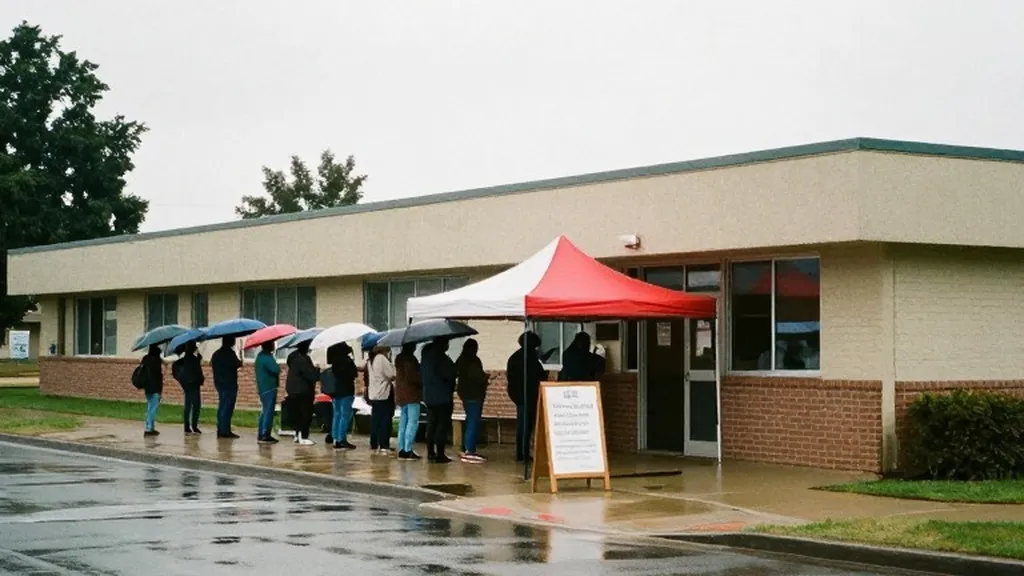
Administrative challenges also play a role in the election day operations. The U.S. Postal Service has added hours, staff, and special lines to ensure that mail ballots are counted on time. This logistical effort is crucial in states that rely heavily on mail voting, such as California, Colorado, and Oregon. The efficiency of these operations will be closely watched as poll workers process the high volume of ballots, with more than 57 million people having already voted as of Monday, surpassing early vote numbers from four years ago in many closely watched states.
The election also has implications beyond domestic politics, with Wall Street watching for signals about AI spending and debt ceiling negotiations. The results could add to investor concerns about economic stability, particularly if the balance of power in Congress shifts. The new congressional maps in states like California, Florida, and Texas may also influence the outcome, as these districts were drawn with an eye toward protecting the President's party. However, the AP notes that new districts in Florida and elsewhere may not vote as they were drawn, adding another layer of uncertainty to the night's results.
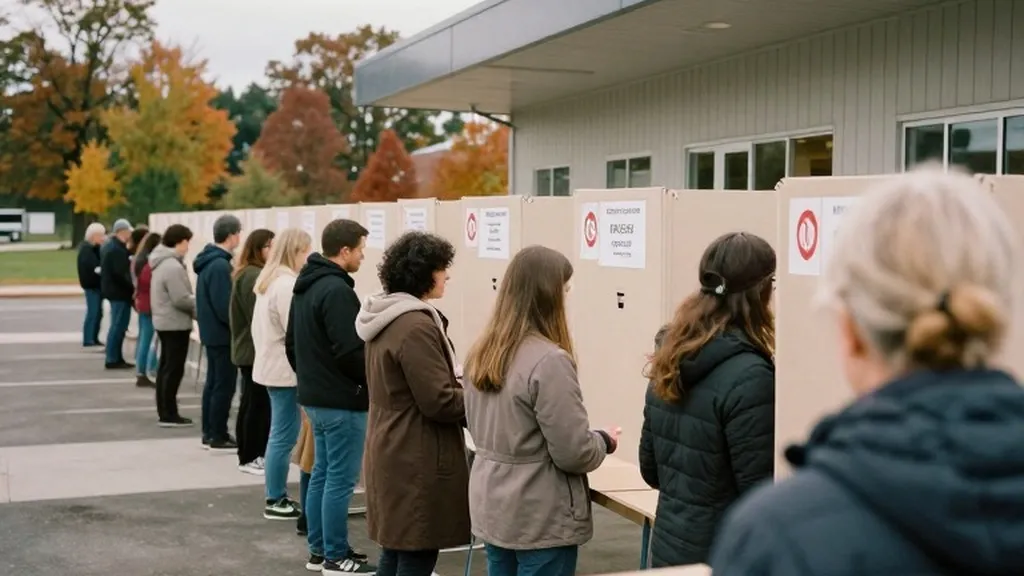
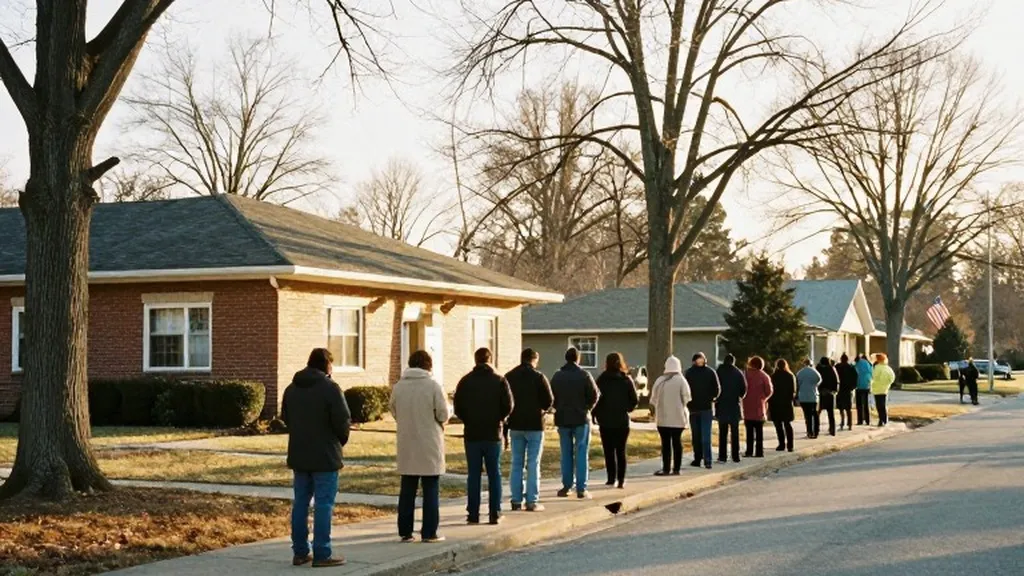
As polls open across the country, the focus remains on the interplay between the President's active campaigning and the structural challenges facing both parties. The election is not just about who controls Congress but also about the future direction of the country under the President's second term. With the approval numbers where they are and the legal battles over voting integrity unfolding in real time, the outcome of this election will likely have far-reaching consequences for American politics and policy in the years to come.