Trump ties state benefits to midterms with personal favors
The president linked ethanol waivers and veterans' claims to Republican victories in Georgia, North Carolina, and Kansas.
By Jason Wood ·
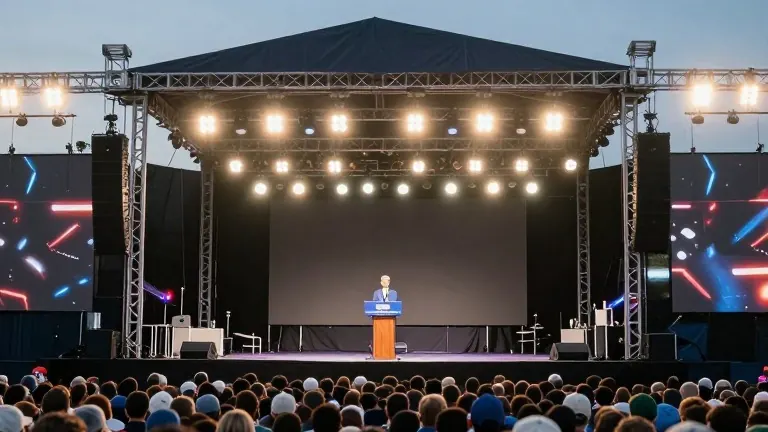
President Donald Trump has linked specific state benefits to Republican victories in upcoming midterms, telling supporters that his willingness to assist depends on who controls Congress. The strategy pairs policy announcements with personal preferences, framing government aid as a reward for political alignment.
In North Carolina, Trump addressed Camp Lejeune veterans during a rally in Greenville. He noted that $1 billion in cash settlements had already been distributed to affected families. The president stated his administration would direct the Justice Department to settle remaining legitimate claims quickly if Republicans win the House and Senate.
“So, if we don’t win, there’s no money,” Trump said. “If we do win, you’re getting it.” He later clarified at the White House that another administration would have to settle the claims if Democrats took control, noting his own Justice Department currently handles the process. Jill Steen Dilgard, an advocate for Camp Lejeune victims, called the conditional language totally unacceptable. “It made me physically sick, and it infuriated me,” she told The Associated Press.
In Kansas, Trump connected an environmental waiver to the Senate race in Park City. He announced a temporary waiver allowing year-round sales of E15, an ethanol-blended gasoline. “With Roger Marshall in the Senate, we will make year-round E15 permanent,” Trump told the crowd. He added that if Democrat Adam Hamilton wins, he would not extend the waiver. Tyson Brody, a spokesman for Hamilton, said the Republican has served for ten years without passing the measure.
Trump also referenced personal dynamics in Ohio and Georgia. In Vandalia, Ohio, he suggested he would be less likely to help Democratic gubernatorial candidate Amy Acton. “She’s never gonna call me,” Trump said. “I’m not gonna help her probably.” In Perry, Georgia, he mocked Democratic Sen. Jon Ossoff using the nickname Pee-wee Herman. Trump acted out a hypothetical call from Ossoff asking for state funding, responding, “I don’t give a damn what he wants.”
The White House defended the approach as a method to secure a Republican majority. Spokesman Davis Ingle said the president aims to deliver on a commonsense agenda. He added that Democrats have shown no clear plan to improve lives. Ossoff criticized the strategy in a statement to The Associated Press. He called it a losing tactic for a president who made goods more expensive to insult voters.
The comments have created tension in key races. In North Carolina, Michael Whatley, the GOP Senate candidate, has struggled against Roy Cooper. Whatley told a local television station that caring for veterans is a priority, even as Cooper’s campaign pointed out Whatley had not denied Trump’s remarks. In Georgia, Collins is seeking re-election while Ossoff defends his seat. Trump told Georgia voters that Collins can call him anytime for help.
The pattern spans multiple states and policy areas. Trump has used rallies to announce semiconductor investments and submarine repair centers alongside these warnings. He framed these actions as tangible benefits available only if his party remains in power after November. The administration’s discretion over waivers and disaster aid allows for such targeted messaging without new legislation.
The approach injects partisan considerations into processes traditionally viewed as nonpartisan. Veterans' benefits and disaster relief often bypass political cycles. Trump’s remarks have drawn sharp responses from Democratic campaigns in battleground states. Each response has focused on the personal nature of the threats rather than just the policy details.
The president continues to use his platform to tie economic and social benefits directly to the November vote. The strategy relies on the perception that state leaders who align with the president receive faster or more generous treatment. This dynamic has become a central feature of his campaign stops across the country this month.
Source: WKMG-TV