Oversight Gap Widens as Iran Builds New Reactor
A $25 billion agreement for a new plant in Hormozgan Province coincides with the IAEA losing access to four key enrichment sites.
By Mei Melnyk ·
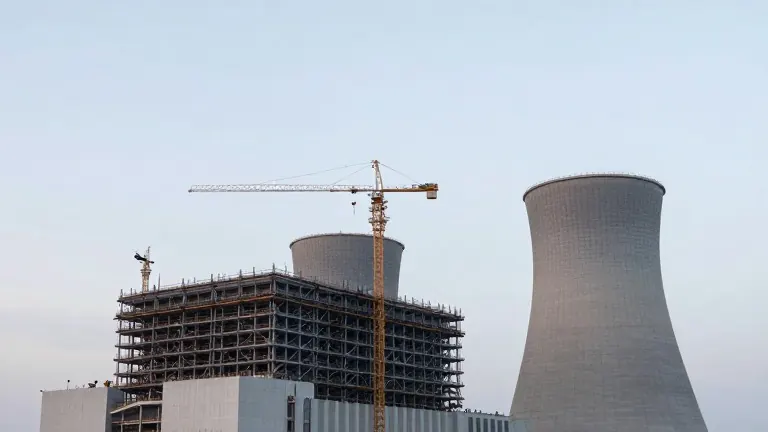
International monitoring of Iran's nuclear program has contracted just as Tehran committed $25 billion to a new Russian-built power plant. The International Atomic Energy Agency reported in June that it could not inspect four uranium enrichment facilities during a recent reporting period. This lack of access occurred while Russia and Iran moved forward with construction on a new reactor site in the south.
The legal and political groundwork for this expansion was laid over the past year. In September 2024, the two governments approved a cooperation plan covering 2024 through 2026. That framework preceded the signing of the Comprehensive Strategic Partnership Treaty, which entered into force in October 2025. These agreements established the structure for deepening ties in technology and energy.
The Sirik plant, located in Hormozgan Province near the Strait of Hormuz, represents the latest step in that partnership. An agreement signed in September 2025 values the project at $25 billion. The facility will have a combined capacity of approximately 5 gigawatts, surpassing the under-3-gigawatt capacity of the completed Bushehr complex. Construction at Bushehr also continues, with the second unit more than 60 percent complete and targeted for operation in 2029.
Rosatom, Russia's state nuclear corporation, manages both sites. Despite the US-Iran war that began in February, Russian personnel have returned to the region. By October 11, Rosatom reported that 135 engineering and technical specialists were back at Bushehr. The company had evacuated most of its staff earlier in the conflict but has since resumed full operations.
The timing of the Sirik deal aligns with growing concerns about transparency. In a June 4 report, the IAEA stated it could not verify the status of nuclear material at the four unvisited sites. The agency also could not confirm whether Iran suspended enrichment, reprocessing, or heavy-water activities required by UN Security Council resolutions. Nikita Smagin, an analyst at the Carnegie Endowment for International Peace, noted in November 2025 that the balance of the relationship is shifting in Russia's favor due to Iran's need for investment.
Nonproliferation specialists point to Iran's stockpile of uranium enriched to 60 percent. The Arms Control Association stated in June 2025 that this level of enrichment has no civil justification and positions Iran to quickly produce weapons-grade material. Russia and Iran continue to expand their military and economic ties, with the CNA noting increased arms transfers since 2022. The new Sirik plant will further entangle the two nations' nuclear sectors for decades.
The IAEA's June findings describe conditions during that specific reporting period. The agency continues to monitor declared sites, but the inability to access the four enrichment facilities remains a documented gap. Russia faces sanctions for its invasion of Ukraine, while Iran faces restrictions over its nuclear program and missile development. Both countries have used these partnerships to maintain influence and secure technology despite Western pressure.
Source: RFE/RL