Qatar aims to secure its own defense by 2031
The Gulf state plans to build independent air and missile defenses to reduce reliance on the United States.
By Joao Menon ·
Qatar intends to build a self-sufficient military defense system by 2031. The goal is to protect the state without waiting for outside help if the United States or regional partners limit their support.
The country faces a difficult strategic position. It is small in size and population but holds valuable energy infrastructure and global trade routes. These assets make it a target, yet its current security depends heavily on American forces stationed on its soil.
Analysts note that this reliance is a vulnerability. In a major crisis, Qatar cannot assume the United States will always intervene. It also cannot count on other Gulf Cooperation Council states to take risks in its defense. The current arrangement leaves the nation exposed if external guarantees fade.
The proposed strategy focuses on six key areas. These include air and missile defense, early warning systems, protection of critical infrastructure, and air and naval power. The plan also covers cybersecurity and electronic warfare. A central pillar is diversifying security guarantees so the country is not tied to a single partner.
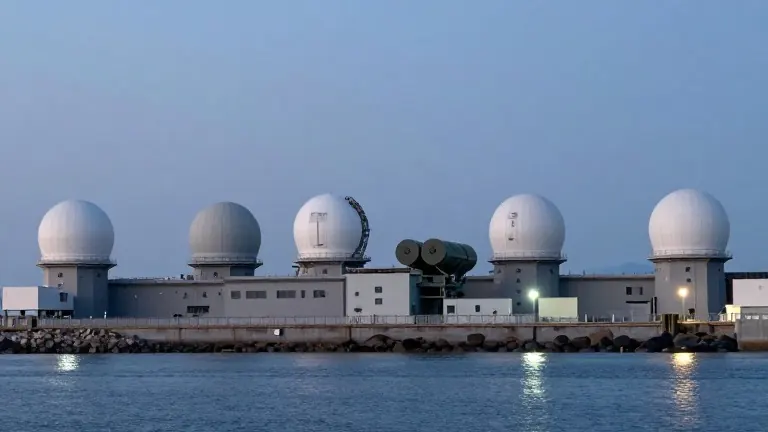
The most urgent gap is an integrated air defense shield. Qatar already has advanced fighter jets and air defense systems. However, these pieces do not work together as a single, autonomous network. The aim is to create a unified command center that links civilian and military radar. This system must function even if US forces leave.
The plan calls for multilayered radar networks and expanded counter-drone capabilities. It also requires large stockpiles of ammunition and spare parts. Qatar must develop low-cost interception systems for small targets and improve electronic warfare equipment. Mobile protection for radar installations is also a priority to ensure the system survives an attack.
The air force needs to sustain operations for weeks without foreign supply lines. This requires increasing domestic ammunition production and expanding maintenance capacity. Qatari personnel must be trained to handle more technical functions. The military also plans to disperse ammunition stockpiles to avoid a single point of failure and increase its fleet of drones.
Maritime security is critical because Qatar exports liquefied natural gas and oil by sea. The navy does not need to be large, but it must make attacks on shipping routes and ports costly. The plan includes improved maritime surveillance and defenses against maritime drones.
A national resilience program will protect critical infrastructure such as desalination plants, power stations, and data centers. Every sector must have backup capacity to prevent a single failure from becoming a national crisis. Qatar also seeks independent intelligence capabilities using commercial satellites and AI. This ensures the state can detect threats before asking allies for help. Diversifying alliances with countries like South Korea, Turkey, and China is part of this broader approach to reduce dependence on any single power.
Source: Al Jazeera