NTSB to spend over a year determining cause of Florida Learjet crash
Investigators found tail fragments a mile from the crater, confirming the jet broke apart before impact, while heavy rains complicate debris recovery.
By Joao Menon ·
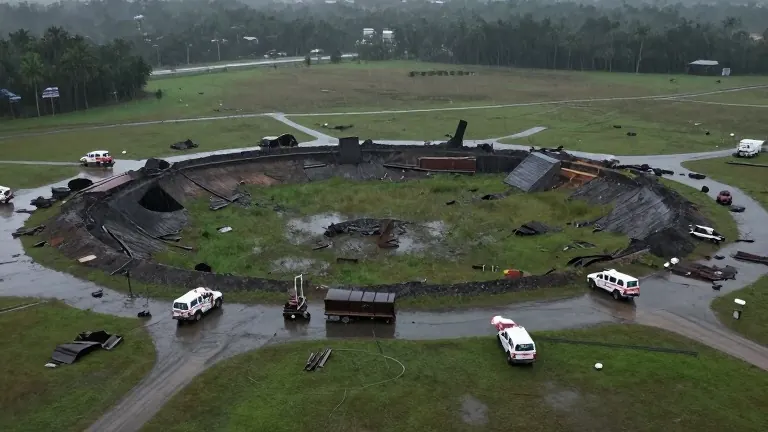
The National Transportation Safety Board will require between 12 and 18 months to finalize its investigation into the crash of a Learjet that killed all nine people on board in Florida. The agency is currently in the initial phase of evidence collection, a process that has been complicated by recent torrential rain and the severe damage inflicted by the impact.
Debris from the aircraft’s tail elevator was recovered more than a mile from the main crater. This discovery indicates that the plane began to disintegrate in the air before it struck the ground. NTSB member Tom Chapman stated that the agency’s goal is to understand not just the events of the crash, but the underlying reasons and to recommend changes to prevent recurrence.
Investigators are prioritizing the search for the cockpit voice recorder. Chapman noted that this device would provide critical data regarding pilot communications during the loss of control, which occurred after the aircraft encountered turbulence and ice accumulation on the wings. He added that while the recorder is important, the team can still determine how events transpired without it through standard investigative methods.
Weather conditions played a central role in the incident. The co-pilot reported to air traffic controllers that the jet was being thrown vertically by more than 700 feet. Retired pilot and safety expert John Cox questioned why the pilots descended from a cruising altitude of 41,000 feet to approach the storm cells. He argued that higher altitudes generally offer better visibility of storm tops. Cox said, “I don’t understand why they came down.”
The NTSB is collaborating with the National Weather Service and the Federal Aviation Administration to analyze the specific weather encounters. Flight path maps show the aircraft entering a rapidly developing storm cell. Investigators will review maintenance records, interview staff from the operator Upper Jets, and examine surveillance footage from bystanders. Heavy rain has filled the crash site crater with water, potentially submerging debris, and required the removal of a utility pole.
A preliminary report is expected within the next month, but this document will only contain factual details and will not determine the probable cause. The final report, which outlines probable causes and safety recommendations, faces a backlog as the NTSB manages over 1,200 active investigations with a workforce of roughly 400. The agency does not have the authority to mandate changes; it relies on regulators and Congress to adopt its suggestions, a process that often takes years.
The investigation will also include a review of the aircraft’s history and any prior issues. The NTSB may hold public hearings to question key individuals, a step taken in other high-profile cases such as the UPS plane crash last year. The agency has asked the public to report any found debris for collection and analysis.
Source: WKMG-TV