Spain's High-Speed Rail Network Suffers Second Fatal Crash in Twelve Months
A collision in Toledo killed 68 people just four weeks before national elections, prompting Prime Minister Pedro Sánchez to pledge a full investigation into command center errors.
By Jason Wood ·
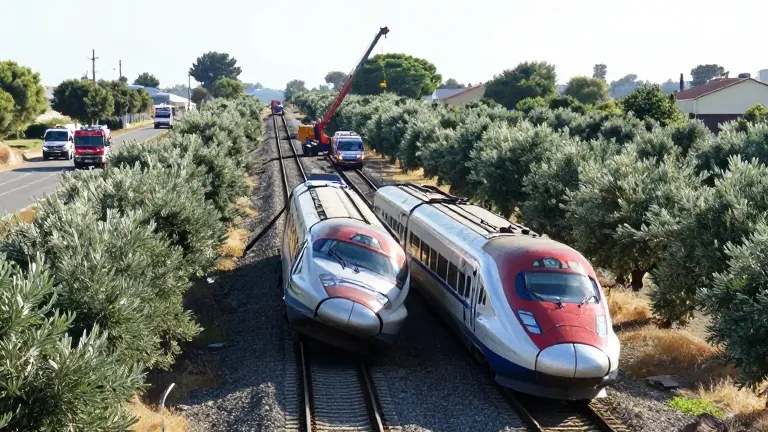
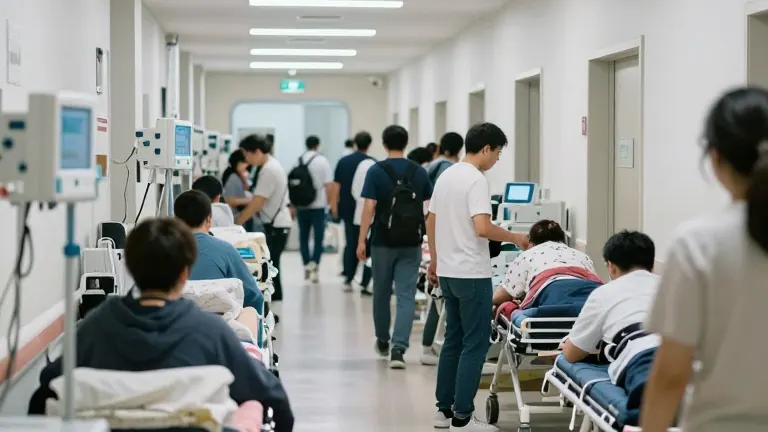
The collision occurred at 8:53 a.m. on Wednesday, turning a quiet stretch of track surrounded by olive groves into a site of severe destruction. The accident killed 68 people and sent dozens to local hospitals. This is the second deadly high-speed rail disaster in Spain this year, striking just four weeks before the country holds its national election.
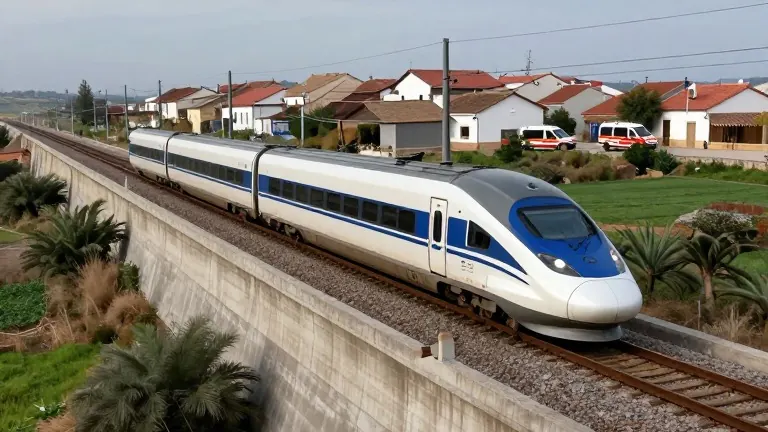
Prime Minister Pedro Sánchez arrived at the scene in the central province of Toledo after regional officials confirmed the death toll. He visited the area to assess the damage and meet with emergency responders. The crash involved a state-owned RENFE train striking a privately operated IRYO train from behind while the latter remained stationary.
The incident follows a previous tragedy in January when 46 people died after a train derailed and hit another vehicle traveling in the opposite direction in southern Spain. Until this year, Spain's high-speed network had not suffered a fatal accident in over three decades. The system ranks second in the world for track mileage, behind only China, and carried 45 million travelers last year.
Sánchez declared three days of mourning starting Thursday. He pledged to reinforce safety measures to restore public confidence in the rail system. "It is clear that we need to reinforce the safety of our train service to rebuild the trust in our high-speed rail," Sánchez said. "It is not acceptable for a country like Spain to endure two high-speed train accidents in the same year."
Transport minister Óscar Puente explained that a computer malfunction caused a security system failure across a 63-kilometer stretch of track at 8:30 a.m. All trains on that line stopped. The IRYO train halted near the town of Urda, while the RENFE train stopped 25 kilometers behind it. A central command center later ordered the RENFE train to resume movement without speed restrictions.
Puente stated that the command center should have kept the train stopped because a stop signal remained active on the line. He noted that even if movement had been authorized, the train should have been ordered to travel at reduced speed. The minister said the crash was caused by an inexplicable order from the central command and that the train engineers were not to blame.
The political fallout has intensified with the election approaching. Sánchez, who has governed since 2018, faces a challenging vote in the country's first national election since 2023. His Socialist party had hoped to capitalize on voter discontent regarding housing costs and rents. However, the crash has added pressure to address infrastructure safety alongside other policy debates.
Sánchez posted on X about an hour before the crash news broke, writing that there are many reasons to be optimistic about the country. He must now manage concerns over rail safety while facing criticism from right-wing parties over migration policies and corruption allegations against his party and his wife, which both have denied.
Alberto Núñez Feijóo, the leader of the Popular Party, demanded a full investigation into the collision. He stated that his party canceled its campaign events for the day to respect the victims. "This is the moment to respect the dead, the injured and their families," Núñez Feijóo said. "That does not mean we will ignore the fact that Spaniards are asking tough questions that demand answers."
Santiago Abascal, the leader of the far-right Vox party, used sharper language in the hours following the crash. He described the event as another tragedy and expressed rage over what he called the government's handling of the crisis. Abascal promised to work until his rival government answered for its actions. Workers used cranes late Wednesday to move damaged train parts after hundreds of emergency personnel spent the day rescuing survivors and recovering bodies.
Source: WLRN