68 killed in Spain as high-speed train strikes stationary rail car
A signalling failure and a control order allowed a Renfe train to reach 200km/h before hitting a stalled Iryo train near Toledo.
By Jason Wood ·
Rail passengers between Madrid and Seville face suspended services and a three-day national mourning period after at least 68 people died in a collision near Toledo on Wednesday. Approximately 80 others were injured, with 50 of those classified as serious and 15 as critical. The crash marks the second fatal high-speed rail disaster in Spain within the last year.
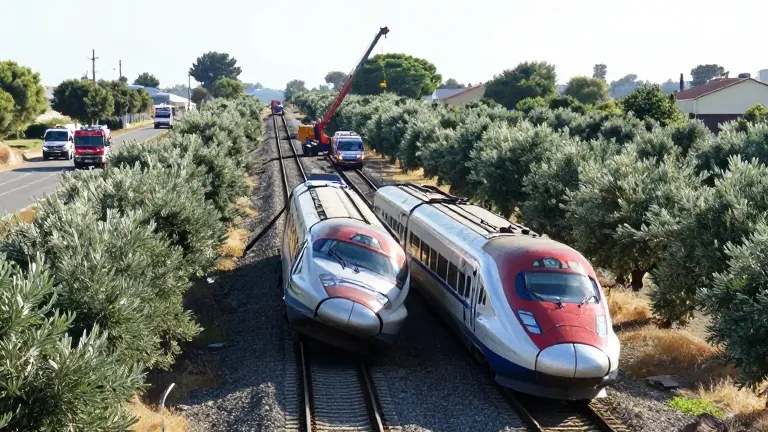
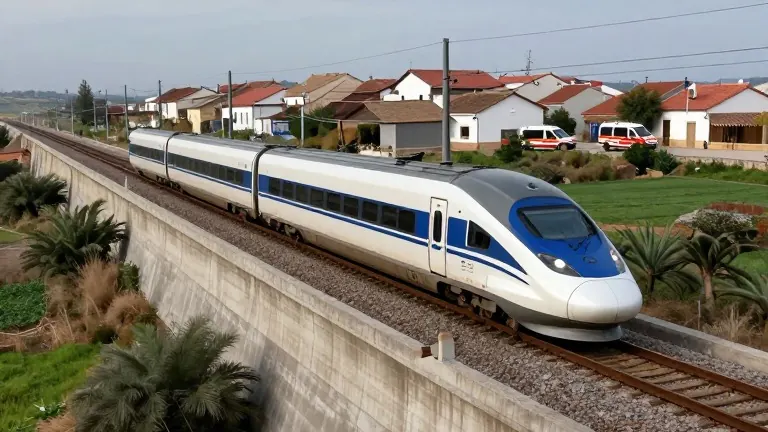
The impact occurred just before 9:00 am local time near the town of Urda. A Renfe train, carrying 397 people, struck the rear of a stationary Iryo train that held 147 passengers. Two carriages from the Iryo train derailed and dropped down an embankment during the collision. Emergency crews have recovered 52 bodies so far and continue to search the wreckage for trapped victims.
Transport Minister Oscar Puente attributed the cause to an inexplicable order issued by a Madrid control center. At 8:30 am, a failure in the LZB signalling system caused six trains on a 63km stretch to stop automatically. Controllers authorized the Renfe train to resume normal speed at 8:36 am. The Iryo train remained stalled until 8:53 am, by which time the Renfe train had accelerated to more than 200km/h.
Rail engineer Jose Luis Gonzalez Vallve stated that the main signalling system would have prevented the crash if it had been functioning. He noted that the system automatically detects stopped trains and applies brakes. Under standard rules, trains may only move at 40km/h when the automatic system is down. No trackside signal existed between the two trains to provide an additional safety check.
Prime Minister Pedro Sanchez visited the site and pledged that any negligence would be exposed. The Madrid and Andalusia high-speed corridor has suspended ticket sales until December 13. An alternative service begins Friday. The current signalling system dates from 1992, and Adif, the infrastructure manager, is in the process of replacing it with the EU standard system under a contract awarded in 2021.
The accident has intensified political tension ahead of national elections. Right-wing youth groups gathered 1,500 protesters at the Ministry of Transport to demand the resignation of Puente. Opposition leader Alberto Nunez Feijoo cancelled campaign events during the mourning period. Far-right leader Santiago Abascal continued campaigning, describing the government as a criminal organization and promising legal action.
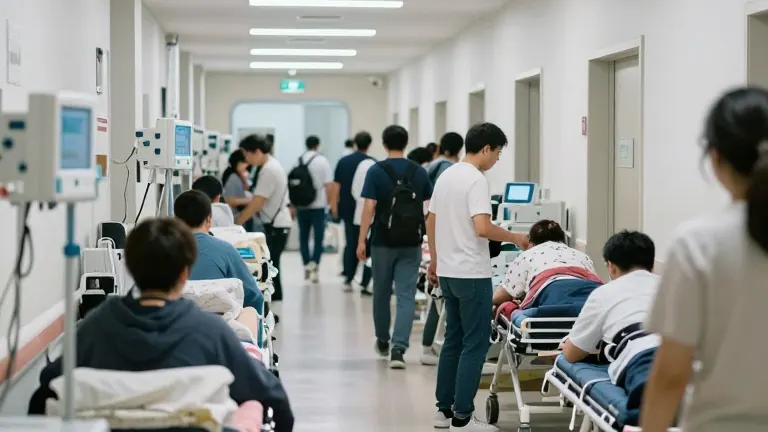
Juan Quesada, a 65-year-old Renfe passenger, described the moment of impact as a tremendous force accompanied by loud noise. He sustained a head injury. Other survivors reported facial swelling and confusion. Hospitals in the region and Madrid are treating the most seriously injured, while a local sports hall served as a triage center for minor cases.
Source: Al Jazeera