Note Found on Altar as Nahariya Police Probe Maronite Church Vandalism
Worshippers discovered smashed statues and a handwritten apology in English at a prayer hall serving 1,100 community members.
By Jason Wood ·
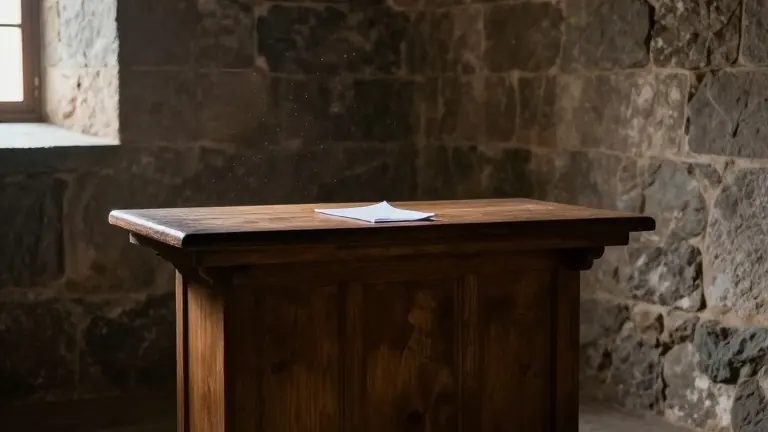
An English note written on a sheet of paper and left on an altar is the central piece of evidence in a new police investigation into vandalism at a Maronite prayer hall in Nahariya. The incident was discovered on Sunday, November 1, when a worshipper entered the building at 5:30 p.m., roughly ninety minutes before the scheduled evening service.
The prayer hall, located on municipal property next to a public garden, serves a community of approximately 1,100 people. While only several dozen individuals attend weekly Sunday services, the congregation swells to hundreds for major religious holidays. The hall has long been used for prayer and religious ceremonies by Lebanese Maronites who served as veterans of the South Lebanon Army.
Father Yosef Yaakov, the spokesperson for the Maronite community in Israel, confirmed that the damage included smashed statues and defaced religious images. He stated that the note left by the perpetrator contained a request for forgiveness and a personal admission. The writer of the note described their state of mind with the phrase, 'I don't know what came over me.' Yaakov said the discovery caused immediate shock among those present.
Police from the Nahariya station opened an investigation immediately after receiving a formal complaint. Investigators are currently examining all possible avenues of inquiry to identify the person responsible. The police force stated that it views violations of holy places with seriousness and intends to exhaust all means at its disposal to bring the perpetrator to justice. At this stage, the identities of those responsible and their specific motives remain unknown.
Yaakov said it was too early to determine whether the vandalism was motivated by religious hatred. He noted that the incident has generated anger and distress within the community, alongside a growing feeling that members are unwelcome. Families with children who regularly attend services have raised concerns about their safety, which has undermined the sense of security in a place traditionally associated with spiritual comfort.
The Maronite Archdiocese in Haifa issued a statement condemning the act as an attack on the sanctity of a place of worship. The church leaders described the event as a violation of the right of believers to practice their religion freely, safely, and with dignity. They called on authorities to identify those responsible and implement measures to protect the hall from similar future incidents.
Despite the damage, the archdiocese confirmed that the community would continue holding religious services at the site. A statement from the church leaders declared that the congregation would not allow the vandalism to deter them from exercising their right to pray. They emphasized that they would continue using the hall with faith and determination, stating, 'we do not respond to destruction with hatred.' The archdiocese added that tolerance did not mean remaining silent in the face of harm.
Source: The Jerusalem Post