NASA Admits Moon Mission Requires 22 Starship Launches
A new internal estimate reveals the Artemis program needs nearly twice the previously hinted number of fuel tanker flights to support a crewed lunar landing.
By Thabo Mokoena ·
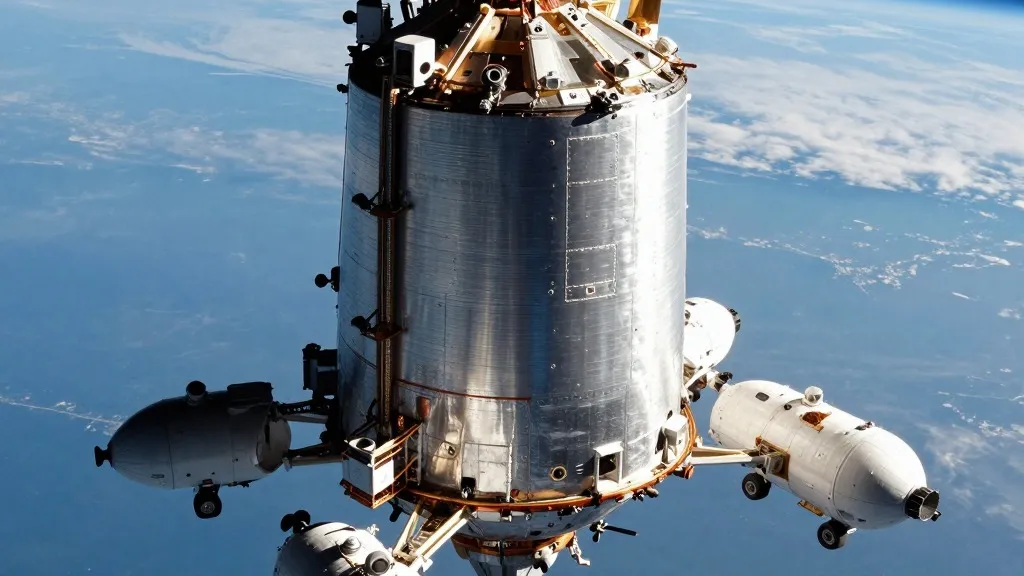
For investors and stakeholders tracking the commercial space sector, the cost and complexity of NASA’s lunar ambitions have just become more tangible. The agency’s latest internal assessment suggests that supporting a crewed lunar landing via SpaceX’s Starship system will require approximately 22 individual launches from Earth. This figure represents a significant escalation in logistical requirements compared to earlier, vaguer estimates, signaling that the path to returning humans to the Moon remains heavily dependent on high-frequency, heavy-lift rocket operations.
This update provides a concrete number where there was previously only speculation. Until now, NASA officials have been notably reticent about disclosing the precise quantity of Starship flights needed to fuel a lunar lander in low-Earth orbit. The hesitation has been so pronounced that some observers have compared the agency’s secrecy to guarding nuclear codes. This opacity has made it difficult for the market to gauge the scale of the infrastructure build-out required for the Artemis program.
The ambiguity surrounding this metric has persisted for years. In 2023, Lisa Watson-Morgan, who served as the director of NASA’s Human Landing System, told Ars Technica that while the agency had a general idea of the requirements, she was reluctant to specify exact figures. She later described the number as falling in the “high single digits to the low double digits.” This range implied roughly a dozen launches, a substantial number that would involve launching one “depot” Starship to be refueled by 11 “tanker” Starships carrying liquid oxygen and methane.
Other NASA officials had previously cited figures in the “high teens,” reflecting a hope that SpaceX could dramatically improve the lift capacity of the Starship rocket. Such improvements would reduce the number of tanker flights necessary to fully load the depot vehicle for its lunar voyage. The expectation was that technological advancements would streamline the process, lowering the barrier to entry for the most complex phase of the Artemis program.
However, recent communications within NASA suggest that this rapid improvement in lift capacity may not be arriving quickly enough. There are growing concerns among agency officials that if the number of required launches remains high, it could impact the timeline for SpaceX’s role in the program. Specifically, there is worry that these logistical hurdles might prevent Starship from playing a meaningful role in returning humans to the Moon within the current decade.
The new estimate was shared on Thursday during a quarterly meeting of the NASA Aerospace Safety Advisory Panel. During the session, panel member Charlie Precourt, a former NASA astronaut, addressed the risks associated with the Artemis Program and the specific challenges of landing humans on the Moon. His presentation highlighted the operational complexities involved in assembling and fueling the lunar lander in orbit.
The shift from vague ranges to a specific number of 22 launches marks a departure from the agency’s usual stance of strategic ambiguity. While the number itself is not a final contract, it serves as a baseline for the current planning parameters. It underscores that the Artemis program is not just a technological challenge but a massive logistical and financial undertaking requiring a sustained campaign of rocket launches.
For the broader market, this clarity on the required launch count allows for better modeling of the supply chain demands. It indicates a need for a robust and frequent launch cadence from SpaceX, which must maintain the production and flight readiness of multiple Starship vehicles simultaneously. The estimate reinforces the critical link between NASA’s lunar goals and the commercial viability of next-generation launch systems.
Looking ahead, the focus will be on whether SpaceX can increase the payload capacity of Starship to lower this 22-launch requirement. If the number holds, the Artemis program will rely on a dense sequence of orbital refueling operations. This sets the stage for the next phase of the program, where the primary risk shifts from technological feasibility to operational reliability and scheduling precision.
As NASA continues to refine its plans, the 22-launch estimate serves as a benchmark for progress. Any future reduction in this number would signal significant efficiency gains in the Starship system. Until then, the agency must plan for a high-volume launch environment to ensure the successful assembly of the lunar lander and the eventual return of astronauts to the Moon.
Source: Ars Technica