Montauk Fishing Guides Report Four-Year Gap in Striped Bass Feeding Frenzies
Long Island anglers cite a lack of small fish as the primary driver behind the population decline that threatens the $8 billion East Coast industry.
By Mei Melnyk ·
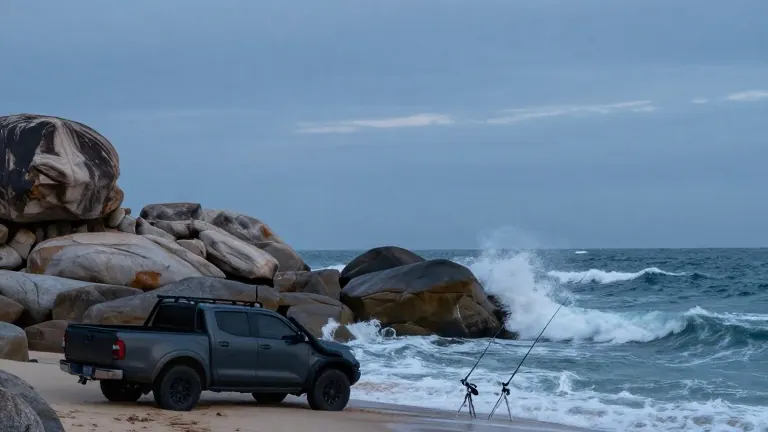
Bill Wetzel has guided fishing trips on the Long Island shore for more than 25 years, but he has not observed a feeding frenzy in four years. The guide, who operates out of Montauk, New York, tracks water currents and bird activity meticulously to locate striped bass. Recently, however, his logs reflect a changing reality: the smaller fish are vanishing from the ecosystem.
Wetzel stated, "I haven’t seen a blitz in four years.. There’s no small fish left. They’re gone." He explained that the remaining population consists almost entirely of large specimens because the species is failing to replenish itself. This shift has altered the daily work of surfcasting guides who rely on consistent feeding events to sustain their businesses.
The decline is not limited to one guide or one location. Scientists attribute the drop in numbers to a combination of human-caused, environmental, and ecological changes. These factors place the $8 billion industry at risk. For many East Coast anglers, the traditional sport of catching striped bass, which can weigh more than 50 pounds, is facing a structural threat.
Jason Markowitz, former president of the Montauk Surfcasters Association, swims to offshore rocks to access prime fishing grounds. He described the current conditions as a case of the "last of the buffalo." Markowitz noted that while some fishermen still find fish, the overall abundance is diminishing. He said the effort is only worthwhile "if the fish are there," a condition that is increasingly rare.
John Skinner, a 65-year-old author and YouTube creator who has fished Long Island for 55 years, described the situation with blunt language: "It sucks." Skinner runs a popular channel on striper fishing and has written a book on the subject. He observes a shortage of small forage fish, such as menhaden, which striped bass require to survive. He also noted a decrease in other large predatory fish in the area.
John Mahan has fished the Montauk rocks since 1987. For the first time in four decades, he has not caught a single striped bass. Mahan recalled the abundance of the late 1980s and 1990s as "spectacular." He suggested that the most effective way to save the species might be to leave the population undisturbed for a period, a difficult prospect for anglers who have spent a lifetime catching the fish.
The striped bass population had previously collapsed, leading to a fishing shutdown in the mid-1980s. Wetzel and other guides in the region are watching the current data with concern, fearing a return to those days of restricted access. The industry, which supports millions of fishing trips annually, now depends on whether the population can recover before the small fish disappear entirely.
Source: WXXV 25