Apple's iPod Marks 25-Year Anniversary as the Pocket Music Revolution
Two decades and a half after its launch, the original iPod is remembered for fitting a thousand songs into a deck-of-cards-sized device.
By Natalia Campos ·
Apple CEO Steve Jobs unveiled the original iPod on this day in 2001, introducing a device that would define the portable music industry for years to come. He opened the presentation by hinting at a "breakthrough digital device that’s not a Mac," setting the stage for a product that promised to put an entire music library in a user's pocket for $399. The device became a cultural phenomenon, serving as the ultimate always-carry gadget for many consumers until smartphones eventually rendered it obsolete.
The launch occurred during a pivotal period for Apple, shortly after the company had navigated the post-dot-com bubble slump. At the time, the Mac OS X era was well established with strong consumer adoption of iBooks and iMacs. Jobs envisioned the Mac as the central hub for a user's digital lifestyle, connecting cameras, camcorders, and DVD players. He identified portable music as a massive, yet leaderless, market opportunity, noting that while competitors like Sony, Creative, and Sonic Blue had existing players, "none of them has really found the recipe yet, for digital music."
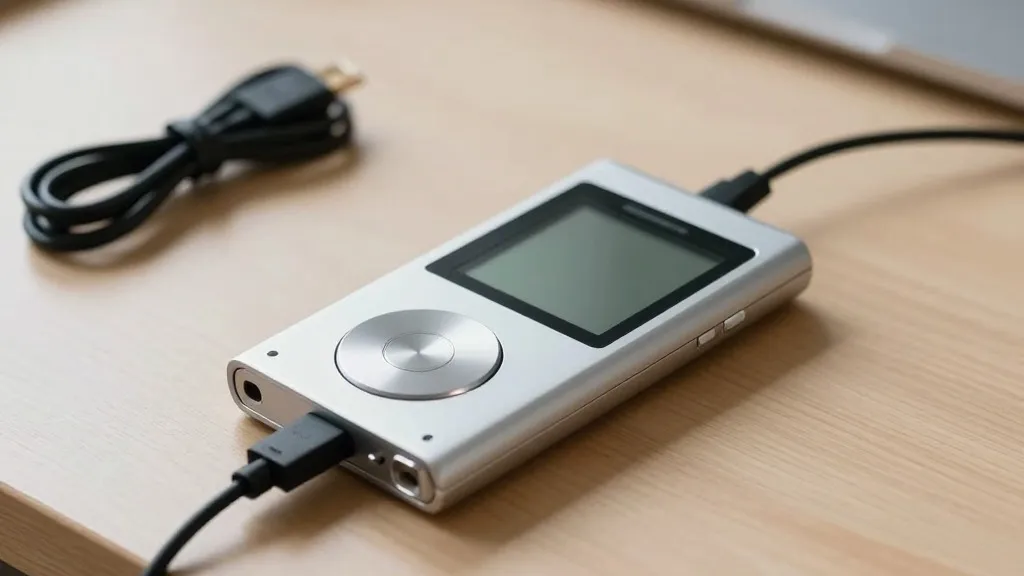
The first iPod was engineered around Toshiba’s ultra-compact 1.8-inch hard drive, measuring just 0.2 inches thick. This technology allowed the device to maintain a 5GB storage capacity while fitting into a footprint no larger than a deck of cards, specifically 2.4 by 4 by 0.78 inches. Weighing only 6.5 ounces, Jobs highlighted that it was "lighter than most cell phones." The storage capacity was marketed as holding 1,000 songs, defined as typical pop-length MP3s encoded at 160Kbps, which Jobs described as "for most people it’s their entire music library."
Performance was a major selling point, driven by the inclusion of FireWire 400 connectivity. Jobs claimed this allowed for an entire CD of music to be transferred in five to 10 seconds, a stark contrast to the roughly five minutes required for USB transfers of the same era. Filling the device with all 1,000 songs took an estimated 10 minutes via FireWire, compared to five hours for USB-based competitors. The device also featured 20-minute skip protection and a rechargeable lithium-polymer battery that provided 10 hours of continuous playback, with an 80% recharge achievable in one hour.
The user experience relied on what Jobs called "an amazing Apple design," featuring a minimal aesthetic and a piezoelectric clicker for tactile feedback on the scroll wheel. This interface allowed for single-handed navigation by playlist, artist, or song. The launch was accompanied by the release of iTunes 2, which introduced Auto-Sync functionality, ensuring that music libraries curated on a Mac were automatically mirrored to the portable player during charging or transfer. The first song demoed on stage was 'Building a Mystery' by Sarah MacLachlan.
Although the iPhone arrived in early 2007, the two products coexisted in Apple's lineup for over a decade. The iPod line continued to evolve, with the 7th-generation iPod Touch released in May 2019. While the product line was left without updates for several years, it was officially discontinued in May 2022, closing a chapter on the dedicated digital music player era.
The legacy of the original iPod remains a cornerstone of Apple's hardware history. It demonstrated the company's ability to refine existing technology into a user-friendly form factor that resonated with the mass market. Twenty-five years later, the device stands as a testament to the power of simplicity and integration in consumer electronics.
Source: Tom's Hardware